
A Lottery Win and the Age Pension: What Happens If a Pensioner Wins $100 Million?

Figures current from 20 September 2026 (Centrelink); 1 July 2026 (super). How this is made
Key takeaways
- A lottery win isn't taxed and isn't counted as income by Centrelink - but the money is an asset, and once it's banked Centrelink deems it to earn income.
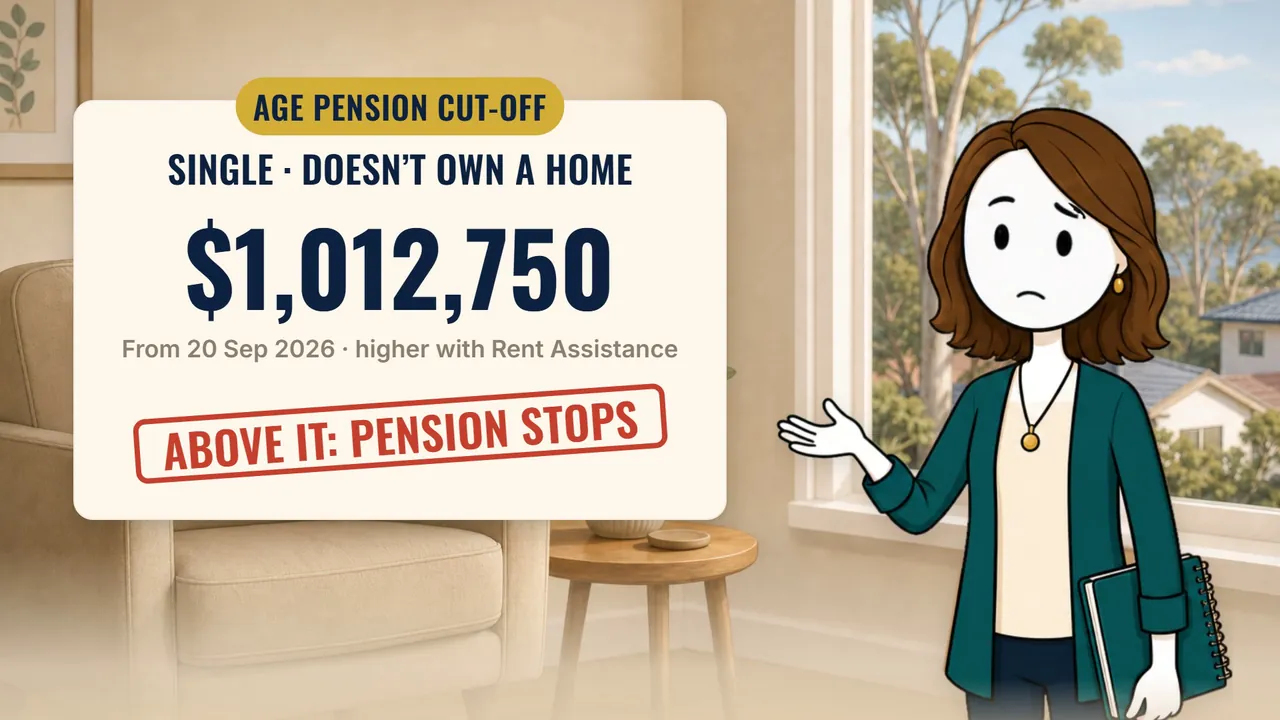
- A single person who doesn't own a home loses the Age Pension once assessable assets pass $1,012,750 (from 20 September 2026; higher with Rent Assistance). The Pensioner Concession Card goes with the payment.
- Super can't absorb a windfall: after-tax contributions are capped at $130,000 a year in 2026-27 (up to $390,000 at once with the bring-forward rule, if you're eligible), and $2.1 million is the cap for moving super into a first tax-free pension.
- The "70% of lottery winners go broke" statistic has no reliable source. Another risk in spending big is sequence risk - big withdrawals early, just as markets fall.
- The everyday versions of the rich's three moves: watching how much you draw, an up-to-date will and binding death benefit nomination, and giving through a gift in your will or deductible donations.
What happens to a lottery win and the Age Pension when a pensioner wins big? Picture Bev: 67, single, renting a little unit in Toowoomba, living on the Age Pension. She checks her ticket three times. She's won $100 million. Bev is made up, but the rules she runs into are real - and most of them apply to ordinary retirement budgets too.

Is a lottery win taxed in Australia?
No. The ATO generally doesn't treat prizes from ordinary lotteries, like lotto draws and raffles, as income, so Bev keeps the whole $100 million. What the money earns from then on - interest, dividends, rent - is taxed like anyone else's income.
How much could you draw from $100 million?
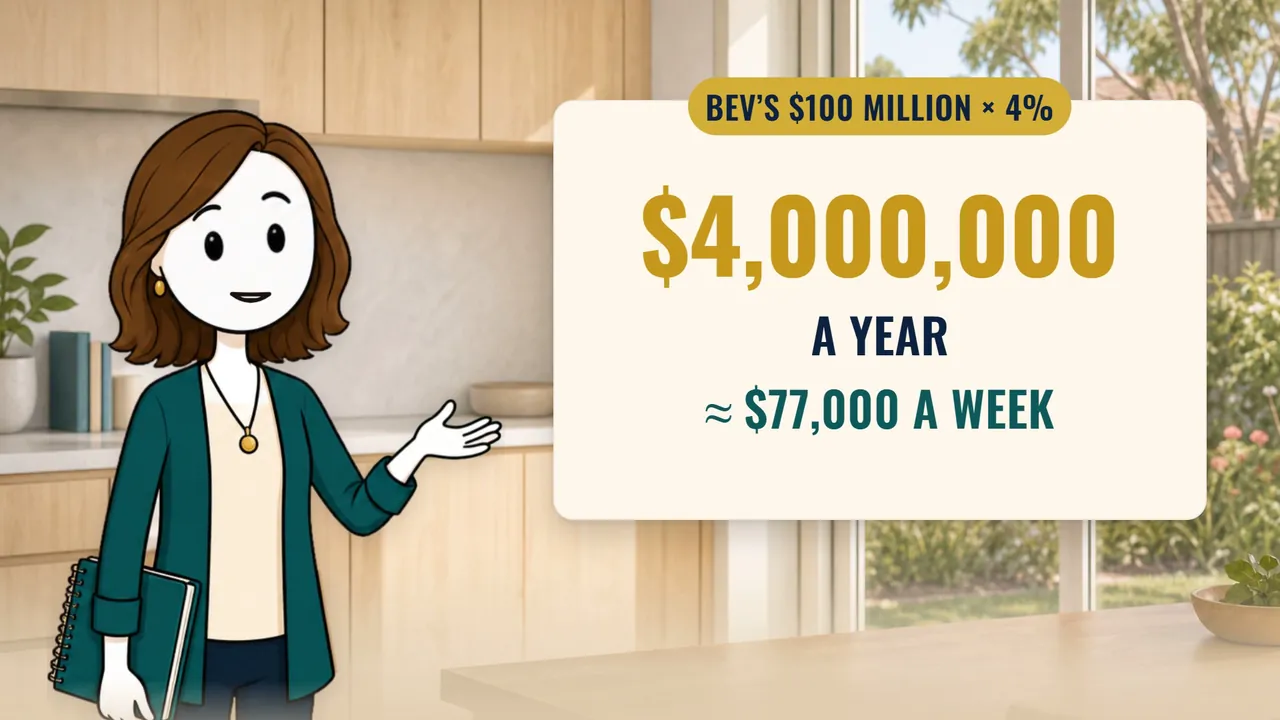
A common retirement rule of thumb is to draw about 4% of your savings a year. It's a rule of thumb, not a rule, but it shows the shape of the problem.
| Savings | 4% a year | About a week |
|---|---|---|
| $100,000,000 | $4,000,000 | $77,000 |
| $500,000 | $20,000 | $385 |
If Bev's investments earn more than she draws, after tax and inflation, her $100 million holds its value. The question is the same at $500,000: how much do you draw each year, compared with what your money earns? At $500,000 there's another difference - at Age Pension age, unlike Bev, you'd likely still get some pension on top.
Does a lottery win affect the Age Pension?
Yes, through the assets test. Services Australia doesn't count a one-off lottery win as income, but once the money sits in a bank account or investment it's a financial asset - counted in the assets test and deemed to earn income under the income test.
For a single person who doesn't own their home, the part pension cancels once assessable assets pass $1,012,750 (the cut-off from 20 September 2026; it's higher if you get Rent Assistance). Bev's $100 million is more than ninety times that, so her Age Pension stops - and with it her Pensioner Concession Card, which comes with the payment. On earnings of millions a year, she can't get a Commonwealth Seniors Health Card either: its income limit is $105,048 for a single person. (Our guide to the Age Pension assets test explains what counts and what doesn't.)
The same goes for other means-tested payments. The Disability Support Pension and Carer Payment have the same cut-off for a single person who doesn't own a home, and JobSeeker stops above $600,000 for a single non-homeowner. One exception: someone who is permanently blind and on the Age Pension or DSP may not be subject to the income and assets tests, unless they get Rent Assistance or their partner gets a payment (for the Age Pension, a partner who isn't also blind).
Can you put a lottery win into super?
Only a little at a time. Super has speed limits, set for 2026-27:
| Limit | Amount |
|---|---|
| After-tax (non-concessional) contributions | $130,000 a year, or up to $390,000 at once with the bring-forward rule, if eligible |
| Transfer balance cap, for a first retirement pension | $2.1 million |
| Extra tax on earnings (Division 296) | On the part of a balance over $3 million (more over $10 million) |
Super was built for everyday balances, and for most people these limits are a long way off. After an inheritance, the bring-forward rule may matter - check the ATO's non-concessional contributions cap page for how it works.
Option 1: spend it
Bev buys a yacht, then a bigger one. She charters a jet to visit her sister in Bundaberg, buys a racehorse called Not Financial Advice, takes up golf and buys the golf course.
Do 70% of lottery winners go broke?
There's no reliable source for it. The statistic is often attributed to the US National Endowment for Financial Education, which says it isn't backed by NEFE research and can't be confirmed. Large studies of Swedish lottery players found little sign of it: large-prize winners were still better off more than a decade later. On average they worked a bit less, and some stopped work earlier.
Another risk: sequence risk
Sequence risk is the risk of big withdrawals early in retirement just as the market falls - you sell investments while they're cheap, and that hole is hard to climb out of even when markets recover. At $100 million Bev can shrug it off. At $500,000, a big early splurge plus a bad market year can change how long your money lasts. The yacht isn't the problem. The timing is.
Option 2: the dynasty
Some very wealthy families set up a family office - a private company whose only job is looking after the family's wealth - with trusts and investment committees, so the money can outlive the founder. (Bev's nephew asks for a Lamborghini. The committee says no.)
Is there inheritance tax in Australia?
No - the ATO says there are no inheritance or estate taxes in Australia. But that doesn't mean everything passes on untouched. Super is the one to watch. If super is paid as a lump sum to an adult child who isn't your dependant for tax purposes, they can pay up to 15% plus the Medicare levy on the taxed part of the taxable component, and up to 30% plus the Medicare levy on any untaxed part. A lump sum paid to a dependant for tax purposes isn't taxed. And capital gains tax may apply when someone sells an asset they inherited.
The everyday version starts with two documents: a will, and a binding death benefit nomination with your super fund, which tells the fund where your super goes.
The gifting limits for pensioners
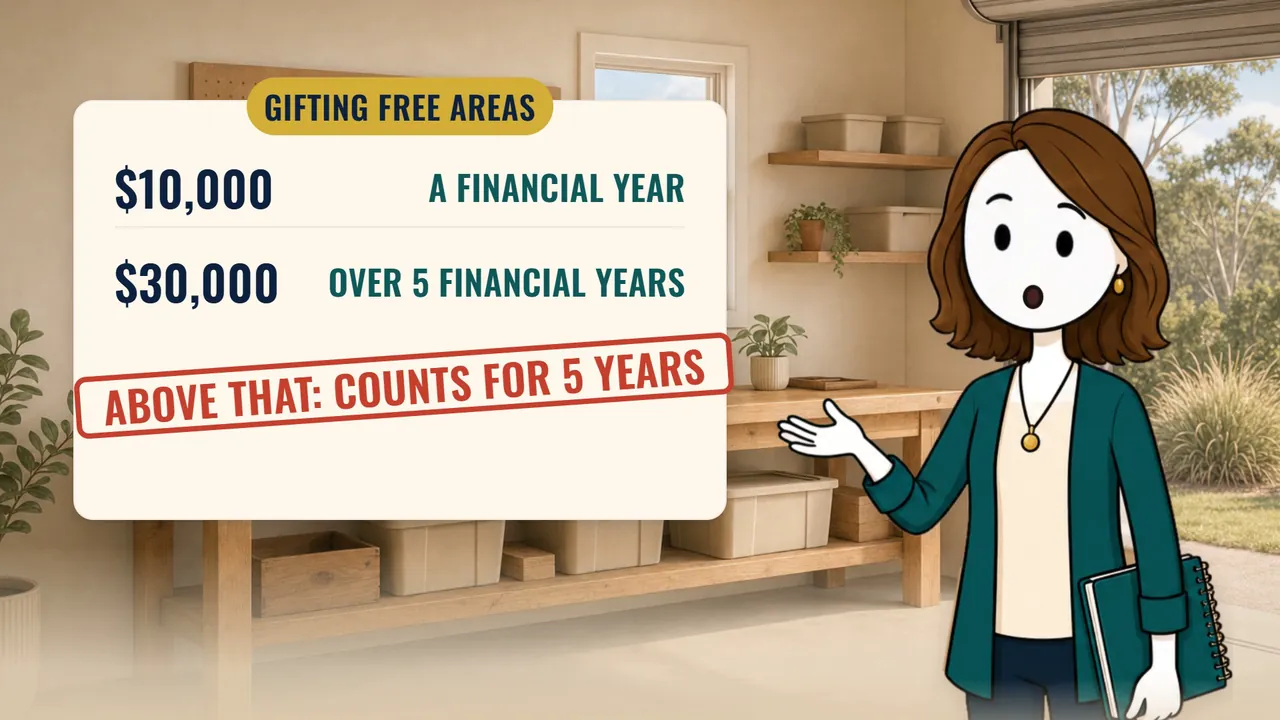
If you're on the Age Pension, or claiming soon, and want to help family now rather than later, Centrelink ignores gifts of up to $10,000 in a financial year and $30,000 over five financial years. Anything above that still counts as your asset for five years, and is deemed to earn income. Donations to charity count as gifts too, and gifts made in the five years before you claim can count. Bev, no longer on the pension, can give whatever she likes. (Services Australia's gifting rules for the Age Pension have the detail.)
Option 3: give it away
More than 250 donors have signed the Giving Pledge, a promise to give away most of their wealth. Andrew and Nicola Forrest were the first Australians to sign. Bev sets up a foundation for local animal shelters and the Toowoomba library.
Some wealthy Australians give through a private ancillary fund - a family's own charitable trust, which invests the money and must give away at least 5% of its net assets each year. The everyday version needs no structure at all: donations to charities with tax-deductible (DGR) status can be claimed at tax time - with no $2 minimum for gifts from 1 July 2024 - if you pay tax. And a gift in your will costs nothing while you're alive.
How the rich retire, and the everyday version
| Move | The $100 million version | The everyday version |
|---|---|---|
| Spend it | Yachts, jets, big early splurges | Enjoy the active early years, and watch how much you draw |
| Pass it down | Family office, trusts, dynasty plans | An up-to-date will and a binding death benefit nomination |
| Give it away | Foundations, the Giving Pledge | A gift in your will, or tax-deductible donations |
What Bev learned
A few months in, everyone wanted to be Bev's friend - long-lost cousins, a man from the pub with a business idea. The hardest money skill turned out to be saying no. And her best day all year was an ordinary Tuesday: coffee with her sister, a walk, an afternoon at the animal shelter. Money buys options. It doesn't buy the rest.
The odds of winning Powerball Division 1 are about 1 in 134 million for a standard game, so it's best not to plan your retirement around it. For the real-world version on a normal budget, start with what the Age Pension actually pays.
Frequently asked questions
Does Centrelink count lottery winnings as income?
No. Services Australia treats a one-off lottery win as exempt from the income test. But once the money is in a bank account or invested, it's a financial asset: it counts in the assets test, and Centrelink deems it to earn income.
Do I have to tell Centrelink about a lottery win?
Yes, if you get a Centrelink payment. Services Australia asks you to tell it about any lump sum you receive, even one you think is exempt from the income test.
Can I give my lottery win to my kids to keep my pension?
Not without it counting. Centrelink ignores gifts up to $10,000 in a financial year and $30,000 over five financial years; anything more still counts as your asset, and is deemed, for five years from the date of the gift.
Sources
- ATO - Crypto asset prizes and gambling winnings - lottery prizes generally not ordinary income (fetched 12 November 2026)
- ATO - If you are a beneficiary of a deceased estate - no inheritance or estate taxes; CGT may apply when an inherited asset is sold (fetched 12 November 2026)
- SmartCompany - the Forrests sign the Giving Pledge - the first Australians to join
- Services Australia - Income test for Age Pension - permanently blind Age Pension recipients: no income test unless they get Rent Assistance or their partner gets a payment and isn't also blind (fetched 11 November 2026)
- Services Australia - Assets test for Age Pension - single non-homeowner part-pension cut-off $1,012,750, from 20 September 2026
- Services Australia - Lump sums while on income support - lottery wins exempt from the income test; financial assets deemed
- Services Australia - How gifting can affect your payment (Age Pension) - gifts in the past 5 years may be included
- ATO - Non-concessional contributions cap - $130,000 from 1 July 2026; $2.1 million general transfer balance cap
- ATO - Better targeted superannuation concessions - extra tax above $3 million from 1 July 2026
- ATO - Payments from super - death benefit lump sums to non-dependants: 15% taxed element, 30% untaxed element
- ATO - Gifts and donations - $2 minimum removed, from 1 July 2024
- The Giving Pledge - Pledgers - more than 250 donors from 30 countries
- Lotterywest - Powerball - Division 1 odds 1 in 134,490,400 (one standard game)
- NEFE - Research statistic on financial windfalls and bankruptcy - the 70% figure is not NEFE research
- Lindqvist, Ostling and Cesarini - Long-run effects of lottery wealth on psychological well-being (NBER, 2018) - Swedish large-prize winners better off for over a decade
- Cesarini, Lindqvist, Notowidigdo and Ostling - The effect of wealth on individual and household labor supply: evidence from Swedish lotteries (American Economic Review, 2017) - winners modestly reduce earnings
- Services Australia - Centrelink's assessment of gifting (Hank Jongen column) - $10,000 a financial year, $30,000 over five; excess counted and deemed for five years; donations are gifts
- Services Australia - Income and assets tests for Disability Support Pension - the permanent blindness exemption and its conditions
General information only. This article is general information only. It doesn't take into account your objectives, financial situation or needs, and it isn't personal financial advice. Speak with a licensed financial adviser about your own situation. Services Australia's Financial Information Service (132 300) is free. Figures are current from 20 September 2026 (Centrelink); 1 July 2026 (super) and change every March, July and September - check servicesaustralia.gov.au and ato.gov.au for the latest.
A note on how this is made: Every article starts with real research and is checked against current ATO and Services Australia figures - that part isn't automated. AI tools help draft the text and produce the video's narration and visuals. We write, verify and stand behind every word.
Keep reading
- What Centrelink Counts as an Asset and What It Ignores (video)
- How to Boost Your Age Pension, Legally: Four Ways and the One That Backfires
- Retirement Planning in Australia: Super, the Age Pension and the Three Ages That Matter
New here? Start with the complete guide: Retirement in Australia, explained - every rule, every test and a countdown to your last working day.