
Super Mistakes After 60: Five That Cost Australians Money

Figures current from 20 September 2026. How this is made
Key takeaways
- Retiring doesn't move your super into retirement phase (a pension account that pays you an income) by itself. Earnings in an accumulation account - where super builds up while you work - are taxed at 15%; in a retirement phase pension they're tax-free.
- A transition to retirement pension's earnings are still taxed at 15% until it moves into retirement phase - automatically at 65, or once you tell your fund you've retired.
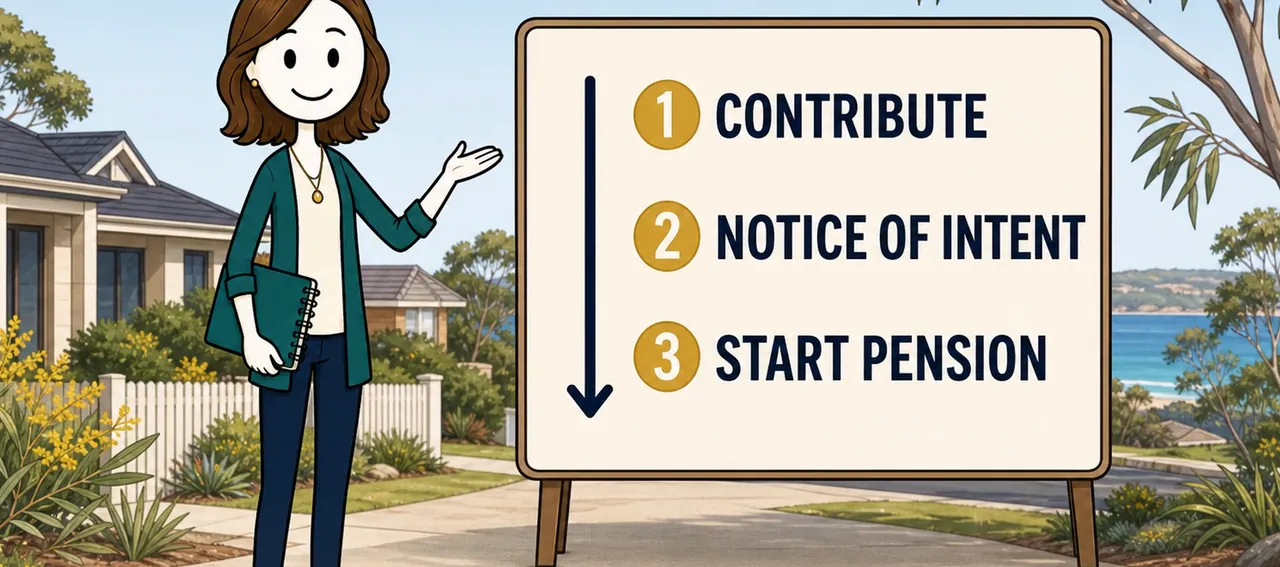
- To claim a tax deduction for a personal contribution, your notice of intent must reach your fund before it starts a pension from that money or you roll it out.
- Under 67, super that isn't paying a pension is invisible to Centrelink. Start a pension and it counts - which can cut an older partner's Age Pension.
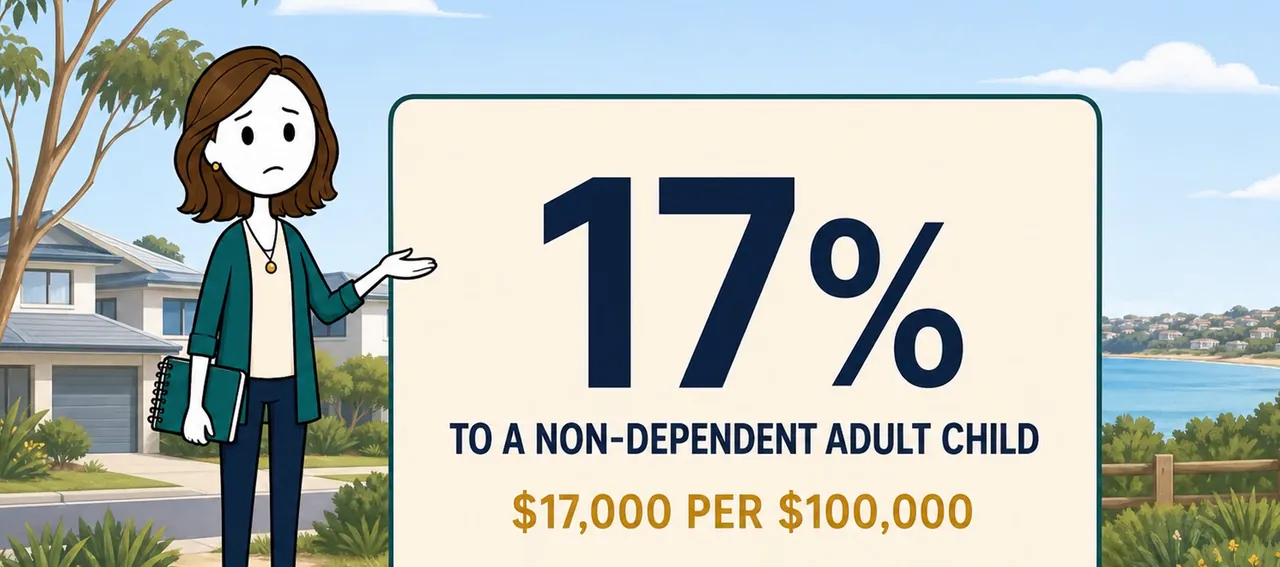
- Super left to an adult child who isn't financially dependent can be taxed at up to 17% on the taxed element of the taxable component (15% plus the Medicare levy) - up to about $17,000 for every $100,000.
Most super mistakes after 60 don't feel like mistakes. Nobody makes a dramatic decision and watches it go wrong. Something you never knew you had to do just doesn't get done - and it can cost you for years. Here are five, every one specific to the years after 60, and every one fixable. None of them is about picking investments.

This video was recorded in August 2026. The rules and figures in this article were checked again on 3 November 2026.
Mistake 1: assuming retirement moves your super for you
When you retire, your super doesn't move into retirement phase on its own. Unless you act, it stays in your accumulation account - the account it built up in while you worked - where the fund pays tax on its investment earnings at 15%.
Move that money into a retirement phase income stream, such as an account-based pension, and the earnings on it are tax-free (ATO: how super is taxed). Same fund, same investments, same money - the tax difference comes down to which account it sits in.
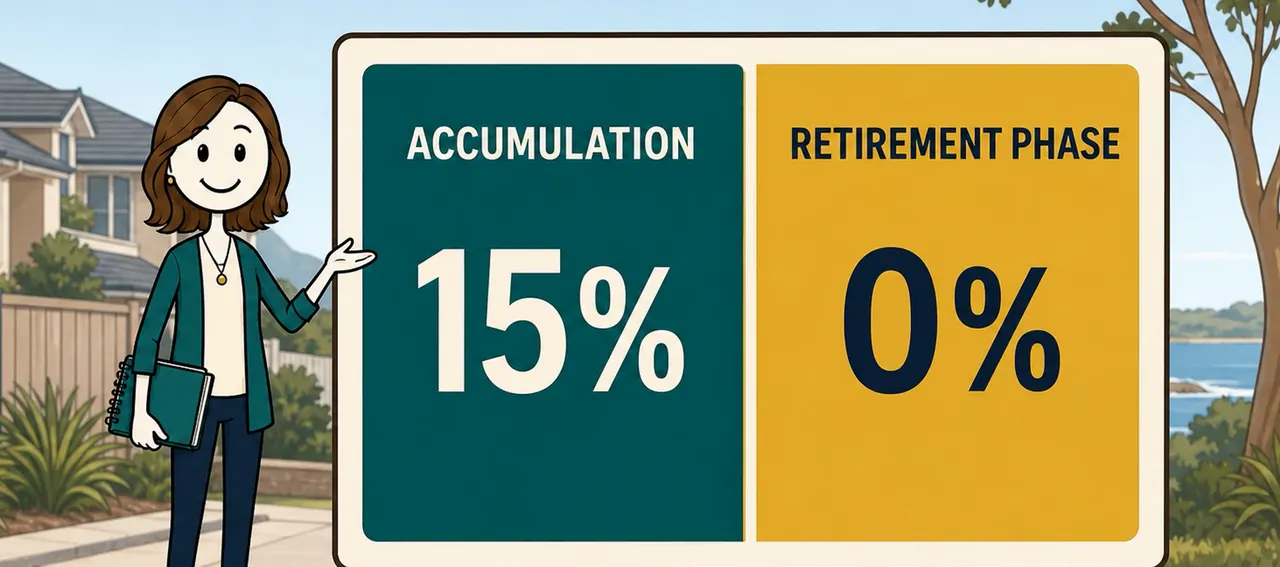
In January 2025, the Super Members Council found that around 700,000 Australians over 65 who aren't working full-time still had an accumulation account, holding about $90 billion between them. It said they could be paying about $650 a year extra in tax on average.
Your fund can tell you how to start a retirement phase pension. Three things to know first:
- There's a lifetime limit on how much you can move into retirement phase - the transfer balance cap. If you start your first retirement phase pension from 1 July 2026, it's $2.1 million; if you had one before then, your own cap may differ.
- A pension has a minimum drawdown - 5% a year at 65 to 74.
- If you're under 67, starting a pension makes that super count for Centrelink. See mistake 4.
Mistake 2: starting a transition to retirement pension you didn't need
A transition to retirement (TTR) pension lets you draw an income from super once you reach preservation age (60 for anyone born from 1 July 1964) while you're still working. It's a useful thing. But it isn't in retirement phase, so its earnings are still taxed at 15%.
A TTR moves into retirement phase only when you meet a full condition of release:
- you turn 65
- you retire - in the ATO's words, your paid employment ended on or after 60 (no further test applies), or it ended before 60 once you'd reached preservation age and your fund is satisfied you don't intend to work again
- permanent incapacity, or a terminal medical condition.
At 65 the move is automatic. For the others, it happens only once you tell your fund.
The mistake is starting a TTR when you've already met one of those, and paying 15% on its earnings when a retirement phase pension would have paid none. Your fund can tell you whether you already have full access.
It works in reverse too. If you're running a TTR and then retire, it moves into retirement phase only once you tell your fund - until then, its earnings are still taxed. At 65 it moves automatically.
Mistake 3: lodging the notice of intent too late
If you make a personal contribution to super and want to claim a tax deduction for it, you have to give your fund a notice of intent in the approved form - and get its written acknowledgment before you claim the deduction (ATO: personal super contributions).
The timing is where it goes wrong. The notice isn't valid if your fund has already started paying a pension based on that contribution, or if you've rolled over or withdrawn your whole account. Get the order wrong and the deduction can be lost - all of it, or the part you've moved.
Around 60, several of these can happen in the same few months: a final contribution, consolidating funds, starting a pension. The order that keeps the deduction:
- Make the contribution.
- Lodge the notice of intent, and wait for the fund's acknowledgment.
- Only then start a pension or roll the money over.
The notice also has a deadline: the earlier of the day you lodge your tax return for that year, or the end of the following financial year. And from 67 to 74, you also have to meet the work test - 40 hours of work in 30 consecutive days in the year - or its one-off exemption to claim the deduction.
Mistake 4: starting a pension without checking your partner
This one affects couples, and people on a Centrelink payment such as JobSeeker.
While you're under Age Pension age (67), super sitting in an accumulation account isn't counted in Centrelink's income and assets tests. Start a pension from it and it is - as an asset, and as income under deeming (Centrelink's assumed rate of return).
Picture a couple with a gap between them. One is 68 and gets the Age Pension. The other is 63, has just retired, and starts an account-based pension, as described in mistake 1. A balance that was invisible to Centrelink has just landed on the couple's means test - and the older partner's Age Pension can fall, or stop.
That doesn't mean "never start a pension". The mistake is doing the sums on one person's super in isolation when Centrelink assesses you as a couple. The same rule applies if you're under 67 and get JobSeeker yourself: a pension from your super counts for that payment. Our complete guide to retirement in Australia works through a couple with an age gap, and our guide to the Age Pension assets test shows how fast a pension shrinks once assets cross the limit.
If there's an age gap and one of you is already on the pension, it's worth seeing both outcomes before anything changes. Services Australia's Financial Information Service is free - call the Older Australians line on 132 300 and ask for a FIS officer - and a licensed financial adviser can model your own numbers. Our guide to how much the Age Pension pays covers the couple rates and limits.
Mistake 5: leaving a tax bill for your adult children
Your super has two components:
- a tax-free component - mostly after-tax money you contributed without claiming a deduction
- a taxable component - employer contributions, salary sacrifice, deducted contributions, and earnings. Most of it is usually the taxed element - the part the fund has already paid tax on.
What happens to it when you die depends on who gets it. Paid to a dependant for tax purposes - such as your spouse - a lump sum death benefit is tax-free. Paid to an adult child who isn't financially dependent on you, the taxed element of the taxable component is taxed at up to 15% plus the 2% Medicare levy - 17%.
| Death benefit lump sum | Tax on the taxable component (taxed element) |
|---|---|
| To a spouse (a tax dependant) | Nil |
| To an adult child who isn't financially dependent | Up to 15%, plus 2% Medicare levy |
That's up to about $17,000 for every $100,000 of taxed element.
The window between 60 and 75
From 60, once you've met a condition of release, lump sums from a taxed super fund are tax-free. And from 1 July 2022, people under 75 can make after-tax (non-concessional) contributions without meeting a work test. Contributions you don't claim a deduction for form part of the tax-free component.
So between 60 and 75, it's possible to withdraw money and contribute it back so that it returns as tax-free component - a recontribution. A withdrawal comes out in the same proportions as the account, so each round only shifts part of the balance.
The contribution caps limit how much can go back in. The non-concessional cap is $130,000 for 2026-27, and under 75 you may be able to bring forward up to three years' worth - but both depend on your total super balance (everything you hold in super), and the cap is nil once that reaches the general transfer balance cap of $2.1 million. Going over has tax consequences, and it can also change what Centrelink counts - so this is one to work through with a licensed adviser.
Check your beneficiary nomination
Your will doesn't automatically cover your super. Most binding death benefit nominations - instructions your fund must follow about who gets your super - expire every three years, although some funds offer nominations that don't lapse. The ATO's super health check suggests reviewing yours at least once a year.
Two changes now law
Division 296: the tax on large balances
Division 296 is now law and applies from 1 July 2026. If your total super balance is over $3 million, an extra 15% applies to the share of your super earnings that relates to the balance above $3 million. Over $10 million, an additional 10% applies to the share above that. Both thresholds are indexed. The ATO will begin issuing assessments later in the 2027-28 financial year. For most people this isn't their problem.
The 2027 capital gains tax changes
From 1 July 2027, the Treasury Laws Amendment (Tax Reform No. 1) Act 2026 replaces the 50% capital gains tax discount for individuals and trusts with cost base indexation, for gains after that date - with exceptions for new residential dwellings and affordable housing - and adds a 30% minimum tax on capital gains for resident individuals. The Act doesn't change the separate CGT discount that complying super funds get.
The bottom line
Five mistakes: assuming retirement moves your money for you; starting a TTR when you'd already qualified for better; getting the paperwork order wrong; starting a pension without checking your partner's position; and leaving a taxable component your children will pay tax on. Not one is about investing. They're all just rules nobody tells you.
Your fund can answer most of these questions about your own account. For how a change would affect your Age Pension, Services Australia's Financial Information Service is free - call the Older Australians line on 132 300 and ask for a FIS officer. (For what the typical balance looks like at each age, see average super balance by age.)
Frequently asked questions
When I'm 60 and have stopped working, can I take all my super tax-free?
Generally, yes, if you've met a condition of release. Retirement is one: in the ATO's words, your paid employment ending on or after 60 (no further test applies), or ending before 60 once you'd reached preservation age with your fund satisfied you don't intend to work again. From 60, lump sums from a taxed super fund are tax-free, and you don't have to take a TTR pension. Your fund can confirm your position. Once you're 67, Centrelink counts the money wherever you keep it - in super or in the bank.
Why not just draw it all out before I die and leave it in my will?
Some people consider that, and the mechanics cut both ways. Withdrawals from 60 are tax-free once you've met a condition of release, but the money then goes through your estate, and if you're under 67, money moved out of an accumulation account into the bank starts counting for Centrelink (from 67, super is counted either way). The timing can't be planned around a death. Because the effects depend on your whole situation, it's worth getting personal advice before acting.
What happens if my salary sacrifice and employer super go over the concessional cap?
The concessional cap is $32,500 for 2026-27, and it includes your employer's contributions as well as salary sacrifice and deducted personal contributions. Excess concessional contributions are included in your taxable income and taxed at your marginal rate. If your total super balance was under $500,000 on the previous 30 June, you may be able to use unused cap amounts from earlier years.
I've started a TTR pension. Is that wrong?
Not if you're still working - that's what it's for. It lets you draw an income from super after preservation age while you work. Its earnings are taxed at 15% until it moves into retirement phase: automatically at 65, or when you tell your fund you've met another condition of release, such as retiring. The mistake is starting one after you've already retired, or not telling your fund when you do.
Sources
- ATO - How super is taxed - earnings taxed at 15% in accumulation, tax-free in retirement phase
- ATO - Retirement withdrawal: lump sum or income stream - retirement phase and when a TTR moves into it
- ATO - Transition to retirement - a TTR isn't in retirement phase until 65, retirement, permanent incapacity or a terminal condition (updated 5 June 2026)
- ATO - Super withdrawal options - conditions of release and the meaning of retirement
- ATO - Personal super contributions - notice of intent validity and deadlines; work test changes from 1 July 2022
- ATO - Payments from super - super lump sum tax table (death benefits; 60 and over) and minimum drawdowns (updated 16 September 2026)
- ATO - Superannuation death benefits - who is a dependant for tax purposes
- ATO - Calculating components of a super benefit - the tax-free component and the proportioning rule
- ATO - Contributions caps - concessional $32,500 and non-concessional $130,000 for 2026-27
- ATO - Transfer balance cap - general cap $2.1 million for 2026-27
- ATO - Super health check - binding nominations
- ATO - Division 296 tax thresholds and Be ready for new tax on large and very large super balances (7 July 2026)
- Treasury Laws Amendment (Tax Reform No. 1) Act 2026 - CGT changes from 1 July 2027
- Services Australia - Superannuation - when super is counted for the Age Pension (the JobSeeker page says the same)
- Super Members Council - Up to 700,000 retirees could be paying more tax than they should (29 January 2025)
General information only. This article is general information only. It doesn't take into account your objectives, financial situation or needs, and it isn't personal financial advice. Speak with a licensed financial adviser about your own situation. Services Australia's Financial Information Service (132 300) is free. Figures are current from 20 September 2026 and change every March, July and September - check servicesaustralia.gov.au and ato.gov.au for the latest.
A note on how this is made: Every article starts with real research and is checked against current ATO and Services Australia figures - that part isn't automated. AI tools help draft the text and produce the video's narration and visuals. We write, verify and stand behind every word.
Keep reading
- Average Super Balance by Age in Australia: 55, 60, 65 and 70 - and What the Age Pension Adds
- The Age Pension Assets Test: What Counts, Where the Pension Stops, and Whether Losing It Matters
- Transition to Retirement Australia: The 15% Rule Most Miss (video)
New here? Start with the complete guide: Retirement in Australia, explained - every rule, every test and a countdown to your last working day.