
Retiring at 55 in Australia: Bridging the Gap to Your Super

Figures current from 20 September 2026. How this is made
Key takeaways
- For anyone born from 1 July 1964, preservation age is 60 - the earliest age you can get at your super by retiring. Stop at 55 and it stays locked for at least five years.
- What matters at 55 is the money outside super. Spending $70,000 a year for five years takes $350,000, before any earnings or tax.
- If you stopped work before 60, your fund has to be reasonably satisfied you never intend to work 10 hours a week or more again. A job that ends on or after your 60th birthday needs no such test, and from 65 your super is released whether you work or not.
- JobSeeker runs to Age Pension age (67) and doesn't count super that isn't paying you a pension - but it counts your savings in full. A single homeowner's payment cancels above $333,000 of assets, and you have to be looking for work.
- Severe financial hardship release before your preservation age (60 for anyone born from 1 July 1964) needs 26 continuous weeks of income support and real hardship, and pays $1,000 to $10,000 once in 12 months. It's a safety net, not a way to fund five years.
You can stop work whenever you like. But if you retire at 55 in Australia, the super rules keep most of your money locked away for at least five more years. This guide covers when your super unlocks and what you have to tell your fund at 60. It then covers where five years of income can come from, and how JobSeeker and early release work in your late fifties - at the rates from 20 September 2026.

This video was recorded in August 2026. The rules and figures in this article were checked again on 4 November 2026.
When can you access your super if you retire at 55?
Not at 55 - not if you were born from 1 July 1964. Your preservation age - the earliest age you can get at your super by retiring - depends on when you were born:
| Date of birth | Preservation age |
|---|---|
| Before 1 July 1960 | 55 |
| 1 July 1960 to 30 June 1964 | 56 to 59 |
| From 1 July 1964 | 60 |
Anyone turning 55 now has a preservation age of 60. After that, the ATO lists the usual ways to get at your super:
- You turn 65, even if you're still working.
- You reach preservation age and retire.
- You reach preservation age, keep working, and start a transition to retirement income stream - a pension from super you can draw while still working.
- You meet one of a few narrow early-access grounds, such as a terminal medical condition, permanent incapacity, compassionate grounds or severe financial hardship.
So between 55 and 60, unless one of those narrow grounds applies, the super is there on the statement but out of reach.
Is your super part of the money you can retire on at 55?
Not for the first five years. Meet Mel. She's an illustration, not a real person: 55, single, owns her home outright, has $200,000 in savings and shares, $800,000 in super, and spends $70,000 a year.
- On paper she has $1 million, plus the house.
- At 55, only the $200,000 is spendable. The $800,000 stays locked until at least 60.
- The house doesn't help either, unless she sells it or borrows against it. Paid off isn't the same as available.
- Five years at $70,000 a year is $350,000 - the bridge she needs before any earnings, tax or price rises.
- Her $200,000 lasts about two years and ten months. That gets her to almost 58, about $150,000 short.
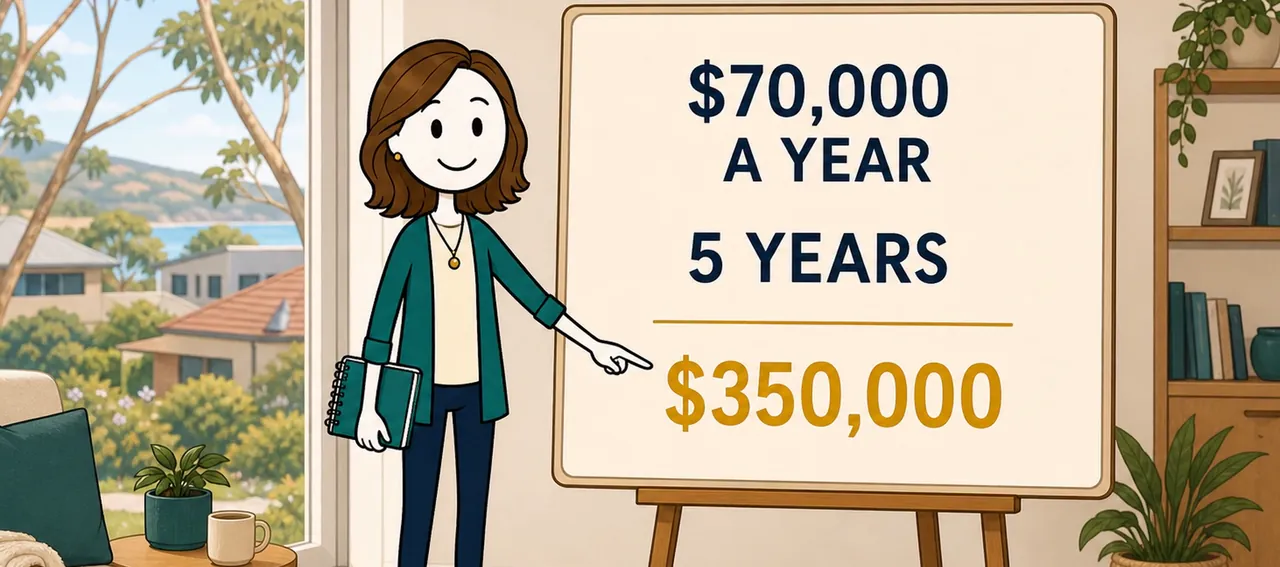
So the question at 55 isn't "have I got enough to retire?" It's "have I got enough outside super to get to 60?"
What happens at 60 if you stopped work at 55?
Turning 60 doesn't unlock your super by itself. You need a condition of release - a reason the law allows your fund to pay you. Before 65, the usual one is retirement. The rules are in the Superannuation Industry (Supervision) Regulations 1994, regulation 6.01(7). From 60, retirement means a job you had has ended, and either:
- you were 60 or older when it ended, or
- your fund is reasonably satisfied you intend never to be gainfully employed again, full-time or part-time.
"Part-time" has a set meaning in the regulations: at least 10 hours a week. Full-time is 30 or more.
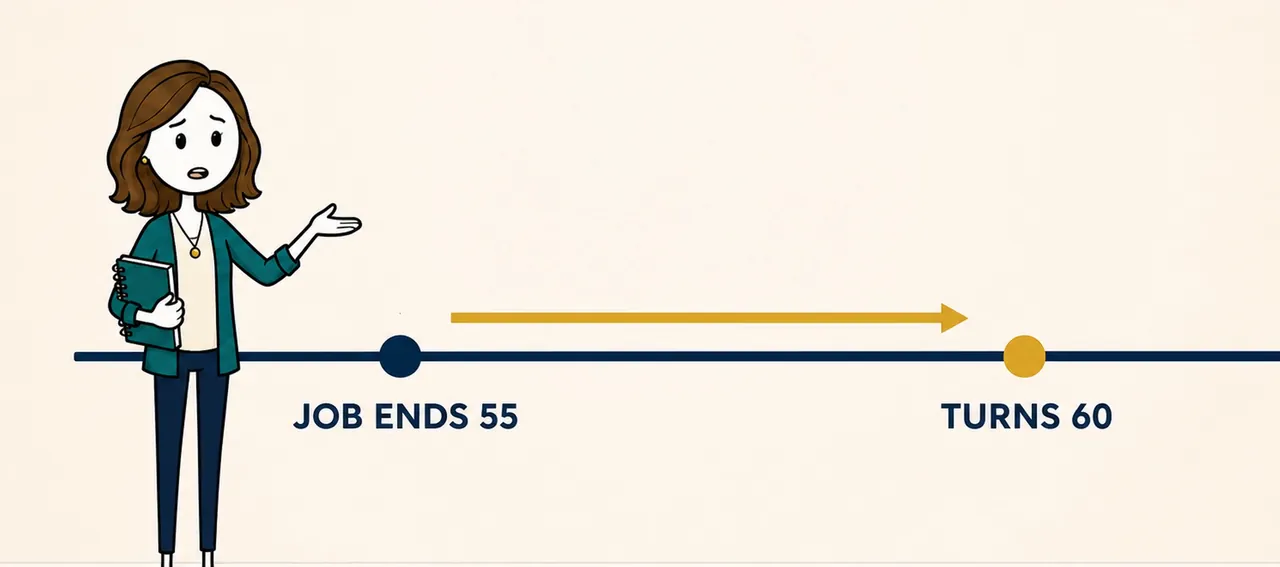
Mel's job ended at 55, so the first route is closed to her. At 60, she has to satisfy her fund that she doesn't intend to work 10 hours a week or more ever again. That's about her intention when she applies - and it has to be honest.
(The regulations have a second version of the rule, with only the intention test. It's for people whose preservation age is under 60 - those born before 1 July 1964.)
At 65, none of this matters
From 65, your super can be released whether you're working or not, with no declaration about the future. That's the backstop - but for Mel it's ten years after she stopped.
Can part-time work after 55 change which rule applies?
It can. Say Mel takes a part-time job at 58, and that job ends after her 60th birthday. A job has now ended when she was 60 or older - so she meets the retirement condition without the intention test.
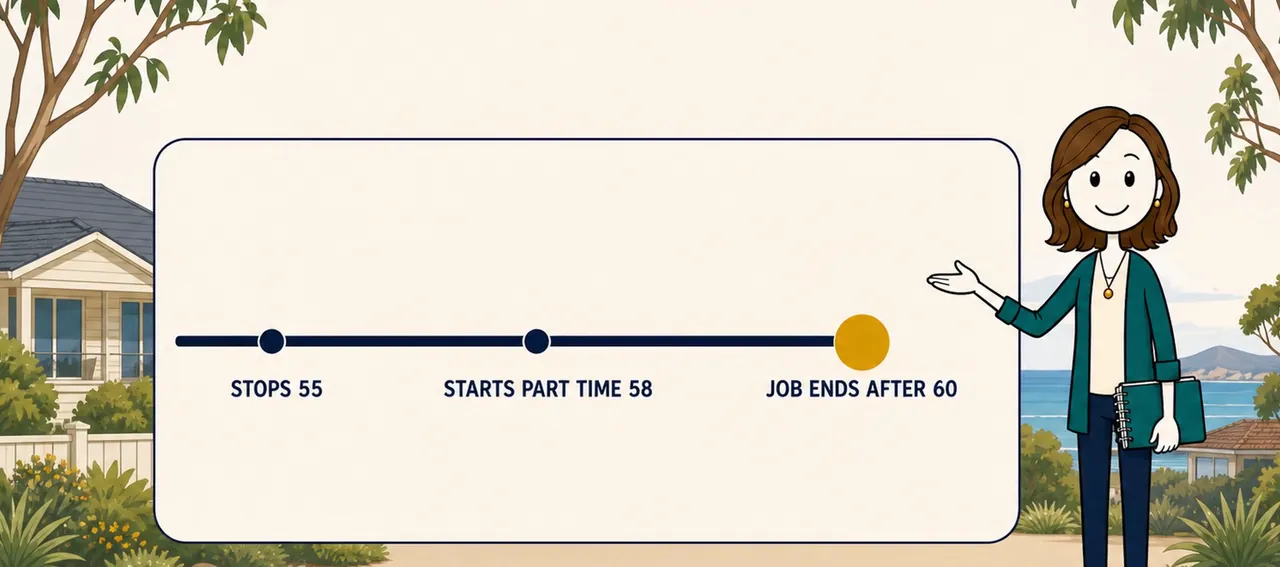
How your fund applies this to your own work history is a question for the fund. Ask before you plan around it.
Where can the money to bridge the gap come from?
There are five usual sources, and the bridge is often a mix of several.
- Leave and redundancy. Long service leave, unused annual leave and a redundancy payment can cover months of spending. If you then claim JobSeeker, a leave or redundancy lump sum can mean a waiting period first (see below).
- Money outside super. Savings, term deposits, shares and exchange traded funds. This is the core of the bridge.
- A partner who keeps working. One wage can shrink the bridge a long way - but it also counts against a JobSeeker claim.
- Part-time or seasonal work. It shortens the bridge, and a job that ends after 60 can change the rule you're assessed under.
- Centrelink. JobSeeker - with conditions that sit awkwardly with the word "retirement".
The downsizer contribution moves money the other way
From 55, you can put up to $300,000 each from the sale of your home into super, as a downsizer contribution. The home must be in Australia and owned by you or your spouse for 10 years or more, the sale must qualify (at least partly) for the main residence capital gains tax exemption, and you can only do it once. It must go in within 90 days of getting the sale proceeds, and it doesn't count towards the contribution caps.
But money in super is locked until you meet a condition of release. For someone bridging from 55 to 60, a downsizer contribution turns spendable money into money they can't reach until at least 60. Services Australia also says a downsizer contribution may affect an income support payment, and suggests speaking to a FIS officer or getting professional advice before deciding.
A partner on the Age Pension
If your partner is 67 or older and gets the Age Pension, starting a pension from your own super can reduce theirs. While you're under 67, super that isn't paying you a pension isn't counted - but once your fund starts paying one, it is. Five super mistakes after 60 covers this one.
Can you get JobSeeker before your super unlocks?

This video was recorded in August 2026, before the 20 September indexation. The JobSeeker, deeming and Rent Assistance figures below are the current ones; the assets limits haven't changed.
Yes, on age. JobSeeker is paid from 22 up to Age Pension age, which is 67. But you also have to meet the income and assets tests, and be either unemployed and looking for work, or sick or injured and unable to do your usual work for a short time.
Your super isn't counted - your savings are
While you're under Age Pension age, Services Australia doesn't count your super in the income or assets tests, as long as the fund isn't paying you a pension. The same goes for your partner's super while they're under Age Pension age too. Everything outside super is counted: savings, shares, an investment property, money you've lent.
Services Australia puts it plainly: taking money out of super doesn't affect your payment, but what you do with it may. Put it in the bank and it counts.
The JobSeeker assets test is a cut-off, not a slope. Your payment cancels once your assets are more than:
| JobSeeker stops above | Homeowner | Non-homeowner |
|---|---|---|
| Single | $333,000 | $600,000 |
| Couple, combined | $499,000 | $766,000 |
| One partner eligible, combined | $499,000 | $766,000 |
That's different from the Age Pension, where the payment shrinks gradually above the limit - see how the Age Pension assets test works.
Mel's position
Here's how the rules apply to Mel - if she's genuinely looking for work. We've assumed $30,000 of car and household contents.
- Assets: $200,000 of savings and shares plus $30,000 of car and contents is $230,000 - under the $333,000 limit. Her $800,000 of super isn't counted.
- Waiting: with $200,000 of savings and shares, she has the maximum 13-week liquid assets waiting period before her first payment. Because she chose to leave her job, she may also face a 4-week unemployment preclusion period (see the waiting periods below).
- Income: deeming - the set rate of return Centrelink assumes your savings earn - puts her income at about $237 a fortnight. That's $87 over the $150 free area, so her payment drops by about $44 a fortnight.
- Payment: about $781 a fortnight - roughly $20,300 a year, less than a third of her $70,000. After nine continuous months on an income support payment, a single person aged 55 or older has a higher maximum rate.
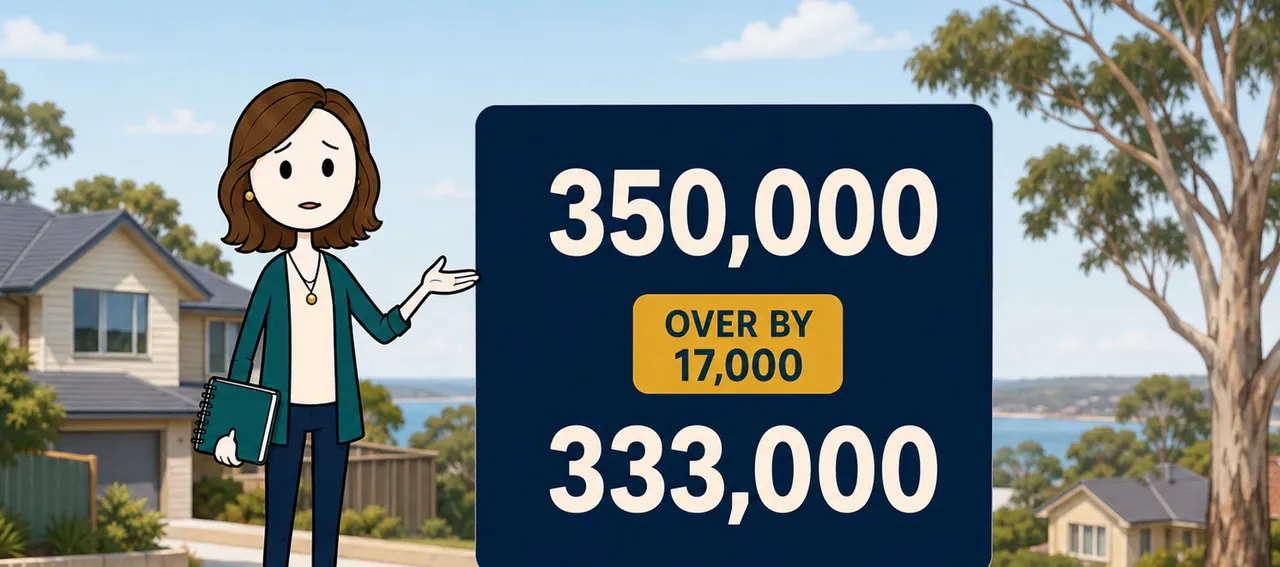
Now the uncomfortable part. If Mel had built the full $350,000 bridge in cash, she'd be $17,000 over the single homeowner limit before her car is even counted - and get nothing. Someone else with $900,000 in super and $5,000 in the bank could get the full payment, with no liquid assets waiting period. They'd still have to be looking for work. The test isn't measuring wealth. It's measuring what you can reach today.
JobSeeker rates and the 55-plus rules
| Per fortnight, from 20 September 2026 | Maximum payment |
|---|---|
| Single, no children | $824.90 |
| Single, 55 or older, after 9 continuous months on an income support payment | $883.30 |
| Partnered | $755.10 |
You also have mutual obligations - the activities you agree to do to keep the payment. From 55, you can fully meet them with 30 hours a fortnight of activities:
- 55 to 59, in your first 12 months on the payment: paid work (paid at least the minimum wage), study or self-employment, or a mix. If you mix in approved voluntary work, at least 15 of the 30 hours must be paid work, study or self-employment.
- 55 to 59, after 12 months: approved voluntary work on its own can meet them.
- From 60: approved voluntary work on its own can meet them, with no 12-month wait.
Meeting your obligations through volunteering isn't the same as being retired, though. JobSeeker is for people who are looking for work. And someone who stopped at 55 needs to tell their super fund, at 60, that they never intend to work 10 hours a week again. Those two pull in opposite directions, and both are statements you make to someone else - so neither should say something that isn't true.
The waiting periods
The two waiting periods most likely to affect a 55-year-old who has just stopped work are:
- The liquid assets waiting period: one to 13 weeks, for money you can get at quickly - savings, term deposits, money your employer owes you. It starts at $5,500 for a single person with no dependants, or $11,000 with a partner or dependants. The maximum 13 weeks applies from $11,500 single, or $23,000 with a partner or dependants.
- The income maintenance period: if your employer paid you a lump sum for leave or redundancy, you may have to wait, or get a reduced rate. Services Australia's example: a 10-week redundancy payment may mean a 10-week wait, from the date you got it.
Some people also have a one-week ordinary waiting period, and Services Australia lists other waiting periods for particular situations.
Leaving a job by choice can add another. Under the Social Security (Administration) Act 1999, someone who claims JobSeeker after becoming unemployed through their own voluntary act can be refused payment for an unemployment preclusion period - usually 4 weeks from the day they became unemployed (6 if relocation assistance was paid) - unless Services Australia is satisfied that leaving was reasonable.
Severe financial hardship can change this, if it's caused by unavoidable or reasonable expenses. The liquid assets waiting period may be waived, and the income maintenance period reduced or waived - for that one, you'll need proof such as receipts. Services Australia says to submit your claim even if your employer hasn't paid you yet.
If you have a partner
Your partner's assets and income both count. Assets are added together, and the homeowner couple limit is $499,000 combined - not double the single figure.
If your partner doesn't get a pension and is between 22 and Age Pension age, your payment falls by 60 cents for every dollar they earn over $1,440 a fortnight. If your own income is under $150 a fortnight, your payment reaches zero once your partner earns $2,711.67 a fortnight - about $70,500 a year.
Selling the home, or renting
- Selling to buy again: sale proceeds you plan to use on a new home are exempt from the assets test for up to 24 months, sometimes longer (for sales from 1 January 2023), and deemed at the lower rate, 1.75%, meanwhile. Proceeds you don't plan to use on a new home aren't exempt.
- Selling to rent: you're no longer a homeowner, so the single limit becomes $600,000. The proceeds all count, though.
- Rent Assistance is paid with JobSeeker automatically if you're eligible - you don't apply. A single person gets 75 cents for every dollar of rent over $157.80 a fortnight, up to $223.80. Retirement village and over-55s village fees can count as rent.
- Tell Services Australia within 14 days of selling. Giving money or assets away above the gifting free areas doesn't take them out of the tests - those gifts can still be counted.
One exception: starting a pension from your super
Under 67, your super stops being invisible the moment your fund starts paying you a pension from it - an account-based pension or a transition to retirement pension. It's then assessed as an income stream: counted in the assets test at its balance, and deemed in the income test. Starting one can reduce or end a JobSeeker payment, and it counts for a partner's Age Pension too.
Can you get your super early for financial hardship?
Possibly - but the test is real hardship. Your super fund decides, not Services Australia or the ATO. If you're under your preservation age, you must have:
- received an eligible income support payment for 26 weeks in a row, with no gaps, and still be getting it when you apply, and
- be unable to meet reasonable and immediate family living expenses.
Most income support payments count; Services Australia lists the exceptions as ABSTUDY, Austudy and Youth Allowance for full-time students. A fortnight with no payment - including when your earnings were too high to be paid - resets the 26 weeks.
If you qualify, you can withdraw between $1,000 and $10,000, once in any 12-month period. It's taxed as a normal super lump sum - generally between 17% and 22% if you're under 60, according to the ATO. Services Australia can give you a letter confirming the income support part, valid for 21 days.
There's a second version once you've reached preservation age plus 39 weeks: 39 weeks of income support in total since preservation age, and not working 10 hours a week or more when you apply. Then there's no limit on the amount.
Either way, it's a safety net for someone who can't pay their bills - not a way to fund a planned five-year bridge.
The bottom line
Retiring at 55 isn't really about whether you have enough. It's about whether you have enough in the right place. Super is real money, but between 55 and 60 it's usually out of reach. And what you tell your fund at 60 depends on when your last job ended.
The bridge comes from leave, money outside super, a partner's wage and part-time work. JobSeeker can help if you're genuinely looking for work - but the cash you saved for the bridge is exactly what its assets test counts. For how super, the Age Pension and the means tests fit together from here, see our complete guide to retirement in Australia.
Services Australia's Financial Information Service is free and can inform you about how these rules apply - call the Older Australians line on 132 300 and ask for a FIS officer. Your super fund can tell you what it needs from you at 60.
Frequently asked questions
Do I really have to declare that I'll never work again?
If your job ended before you turned 60, yes - the regulations say your fund must be reasonably satisfied you intend never to be gainfully employed again, full-time or part-time (10 hours a week or more). Your fund decides how it is satisfied, so ask it what it needs. It's about your intention at the time, and it has to be honest. If you're not sure you're finished with work, there are two other routes: a job that ends on or after your 60th birthday needs no intention test, and from 65 your super can be released whether you work or not.
Can a single person have $333,000 in the bank and still get JobSeeker?
On the assets test, a single homeowner can have up to $333,000 of assets in total, car and household contents included - the payment cancels only above it. So $333,000 in the bank works only if nothing else is counted. But the income test still applies: deeming on $333,000 would cut the payment to about $668 a fortnight, and that much in savings means the maximum 13-week liquid assets waiting period. You'd also have to be unemployed and looking for work.
Can I work part-time and still get some JobSeeker?
Yes. For a single person with no children, your payment starts to fall once your income is over $150 a fortnight: by 50 cents in the dollar up to $256, then 60 cents in the dollar above that. It stops altogether at $1,557.17 a fortnight, or $1,667.34 if you're 55 or older and have been on a payment for at least nine months in a row. Paid work also counts towards your mutual obligations.
Do I need a paid-off house and $1 million to retire at 55?
No. Mel's figures are one illustration. The bridge is your own yearly spending multiplied by the years until you can get at your super - so a lower cost of living means a smaller bridge. If you rent, the JobSeeker assets limit is higher ($600,000 single) and Rent Assistance may be paid on top, but your rent keeps going in retirement, so it goes into the spending side of the sum too.
Sources
- ATO - Super withdrawal options - preservation age by date of birth; withdrawal at 65; the meaning of retirement
- Superannuation Industry (Supervision) Regulations 1994 - reg 1.03(1) (gainfully employed; part-time = at least 10 hours a week), reg 6.01(5) (severe financial hardship), reg 6.01(7) (retirement), Schedule 1 items 101, 105 and 106 (compilation 159, in force from 1 July 2026)
- ATO - Retirement withdrawal: lump sum or income stream - transition to retirement income streams
- ATO - When you can access your super early - compassionate grounds, terminal illness, incapacity; hardship withdrawals generally taxed 17% to 22% under 60 (updated 8 July 2026)
- ATO - Access due to severe financial hardship - 26 weeks, $1,000 to $10,000, once in 12 months; the 39-week version (published 8 July 2026)
- Services Australia - Who can access their superannuation early and evidence of severe financial hardship - eligible payments, what resets the 26 weeks, the 21-day letter
- ATO - Downsizer super contributions - from 55, up to $300,000 each; 10 years' ownership, main residence exemption, once only, 90 days (updated 20 January 2026)
- Services Australia - Who can get JobSeeker Payment - 22 to Age Pension age; unemployed and looking for work
- Services Australia - How much JobSeeker Payment you can get - rates from 20 September 2026
- Services Australia - Income and assets tests for JobSeeker Payment - assets limits from 1 July 2026; payment cancels above them
- Services Australia - Income test for JobSeeker Payment - $150 free area, 50c and 60c tapers, partner income test, cut-offs (updated 29 October 2026)
- Services Australia - Superannuation (JobSeeker) - super not counted under Age Pension age unless it pays a pension; withdrawals put in the bank count; downsizer note
- Services Australia - Financial investments - account-based income streams assessed at their balance
- Services Australia - Deeming - 1.75% on the first $66,800 (single), 3.75% above; home sale proceeds at the lower rate
- Services Australia - Liquid assets waiting period - 1 to 13 weeks; $5,500 / $11,000 thresholds (updated 30 July 2026)
- Services Australia - Income maintenance period - leave and redundancy lump sums; waivers
- Services Australia - When you'll get your first payment - the waiting periods that can apply
- Services Australia - Ordinary waiting period - one week, for some claims (updated 4 May 2026)
- Social Security (Administration) Act 1999 - ss 42AE, 42AH and 42AO: unemployment failures and the 4-week unemployment preclusion period (compilation 164, in force from 19 September 2026)
- Services Australia - Mutual obligation requirements if you're 55 or older - 30 hours a fortnight; 55 to 59 and from 60 (updated 27 October 2026)
- Services Australia - Real estate assets - the principal home; 24-month exemption for sale proceeds; 14 days to report
- Services Australia - Gifting - gifts above the gifting free area can still count
- Services Australia - How much Rent Assistance you can get and Who can get it - single: 75c per $1 over $157.80, maximum $223.80 (from 20 September 2026); paid automatically
- Services Australia - Who can get Age Pension - Age Pension age is 67
- Services Australia - Financial Information Service - free
General information only. This article is general information only. It doesn't take into account your objectives, financial situation or needs, and it isn't personal financial advice. Speak with a licensed financial adviser about your own situation. Services Australia's Financial Information Service (132 300) is free. Figures are current from 20 September 2026 and change every March, July and September - check servicesaustralia.gov.au and ato.gov.au for the latest.
A note on how this is made: Every article starts with real research and is checked against current ATO and Services Australia figures - that part isn't automated. AI tools help draft the text and produce the video's narration and visuals. We write, verify and stand behind every word.
Keep reading
- Super Mistakes After 60: Five That Cost Australians Money
- The Age Pension Assets Test: What Counts, Where the Pension Stops, and Whether Losing It Matters
- Can You Retire at 60 in Australia? The Rules That Unlock Your Super
New here? Start with the complete guide: Retirement in Australia, explained - every rule, every test and a countdown to your last working day.